Full Circle: The Power of Story to Transform and Resist
A potent reflection from Erin Millar on transforming media with and through Coralus.
FOREWORD BY

Erin Millar
Co-Founder of Indiegraf
Coralus Selected Venture
My first introduction to the power of community media was through the student press.
It was late spring of 2002 at Capilano College in North Vancouver. I was studying music, but anger — not ambition — pulled me into journalism. The Valentine’s Day issue of our student paper was full of sexist, misogynistic content. I didn’t know who was behind it, but I knew this didn’t reflect our community. That newspaper was ours.
I showed up at the Cap Courier AGM, where a group of others, equally pissed off, had gathered. We somehow left as the new masthead – I became editor – and we started a lifelong friendship.
Over the next two years, we built a newspaper that thrived. We battled the student union and held the College’s board accountable. We published investigations that prompted change, including one that forced our cafeteria company to start recycling as required by contract. Most importantly, we created a platform that reflected our culture. It was weird and funny and deeply ours — the connective tissue that made Capilano feel like a real community.
I loved it all. It taught me that stories aren’t neutral. They either reinforce the status quo or challenge it. They can oppress, or they can connect a community.
Media without community
The next decade took me into Canada’s top media: Maclean’s, The Globe and Mail, Reader’s Digest, The Walrus. I reported from around the world — on Thailand’s first woman forensic scientist, on Canadian coal companies cutting into rainforest in Borneo, on the gambling boom in Macau. My stories were translated into more than 20 languages. I published a book.
It was everything I’d dreamed of. But something was missing.
Publishing those stories often felt hollow. They enlightened, sometimes even provoked change — but I rarely felt connected to the people I was writing for. My favourite job, still, was running that student paper. Because it felt real.
Reporting on education for The Globe made that gap concrete. I wanted my work to make an impact, but change in education happens locally — and local media was collapsing. Education reporters were gone. Newsrooms were understaffed, chasing clicks. Once I saw the problem, I couldn’t unsee it.
A new model

Around that time, I saw Vicki Saunders speak for the first time. “Everything is broken. What a great time to be alive,” she said. She painted a picture where we could rebuild the systems that no longer served us. I believed her. I became an entrepreneur.
In 2014, I led a small group of journalists and launched Discourse Media to reimagine journalism. We built our model around listening, collaboration, and partnership with communities — radically different from the top-down journalism I’d been trained in. We were incentivized to serve our audience, rather than grab their attention to sell to advertisers.
I joined Coralus as an Activator in 2016 and Discourse became a Venture in 2017. Meantime, Discourse grew into a network of six local publications. It incubated IndigiNews, now an independent nonprofit led by Indigenous women. Discourse proved what was possible when journalism was rooted in community, but it also revealed the limits of doing this work one community at a time.
Scaling community-rooted media
During the five years that Discourse established a new model in a handful of B.C. communities, hundreds of local newspapers closed, their business models failing as Facebook and Google gobbled up advertising dollars.
But in this collapse, we saw an opportunity to transform local media to be more responsive to communities. What if every community could own its own platform for storytelling?
That question led us to create Indiegraf in 2020 — a shared technology and growth platform designed to make it possible for independent journalists and community organizations to build their own community media. Indiegraf is more than a tech company: it’s a movement of independent journalism, a network of people rebuilding media from the ground up on principles of trust, participation, and belonging.

Indiegraf provides the publishing and monetization infrastructure, but the real magic happens in the stories our partners tell. From small towns in Canada to Spanish-language publishers in the southern United States, more than 170 communities now use Indiegraf to build local media that reflects who they are and what they care about. Outlets like Kansas City Defender, which has built an audience of 6 million young Black people in the tradition of the historical Black press, Conecta Arizona, which serves the critical information needs of Latino audiences facing immigration threats, and The Breach, which publishes bold adversarial journalism mapping a just future for Canada.
Together, these publishers have already driven major structural change — including leading the formation of the Canadian Journalism Collective, which secured $500 million from Google for independent news.
Our vision is that every community in the world can have access to its own storytelling platform — one that strengthens democracy, culture, and connection from the ground up.
Coralus joins the independent media movement
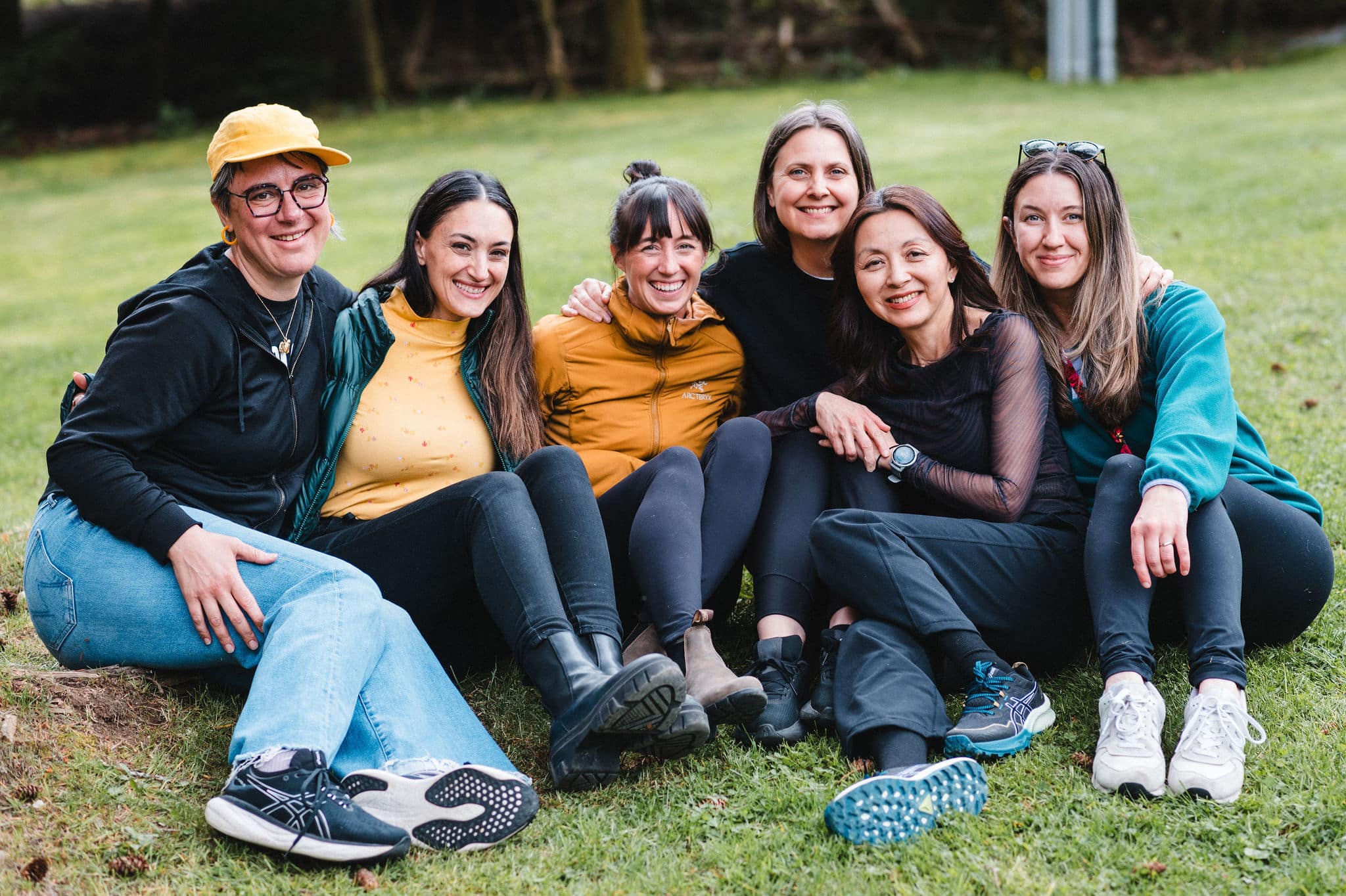
As Coralus launches its own magazine powered by Indiegraf, it feels like a full-circle moment — not only in my own journey, but in the evolution of how our Coralus community claims the power of narrative.
Two decades ago, I walked into the Cap Courier AGM because I couldn’t accept our student newspaper not reflecting our community’s values. Today, I look at the global media system — platforms built by misogynistic authoritarians for profit, outrage and control — and feel that same instinct rising. The scale has changed, but the impulse is the same: this doesn’t reflect who we are. The erosion of truth and empathy is being accelerated by technology that rewards division.
But the difference now is that we know how to build something better.
Generative AI can flood the world with cheap, contextless content. But it can’t generate trust. Our relationships and communities are our competitive advantage. Reclaiming storytelling is an act of resistance.
Across Indiegraf’s network, hundreds of journalists and organizers are proving that communities can create their own narratives — ones rooted in belonging rather than division, service rather than extraction, truth rather than spin. That’s where real power lies.
As Vicki once invited me to reimagine broken systems through entrepreneurship, Coralus is now inviting all of us to reimagine how we tell our collective story — to create spaces where generosity and interdependence, not dominance and fear, shape the narrative.
That’s what excites me about this new chapter. Coralus isn’t simply launching a publication; it’s stepping into a living ecosystem of independent media that is nurturing trust, connection, and relationships from the ground up.
The fight for story is the fight for who we are, and who we have the imagination to become.
Author