
Mapping What’s Emerging at Coralus
For years, we’ve been asking ourselves: what are the Ventures telling us?
As we looked across our growing portfolio, we began to wonder – what story are these businesses collectively telling about what we value, who we’re drawn to support, and what futures we’re helping bring into being?
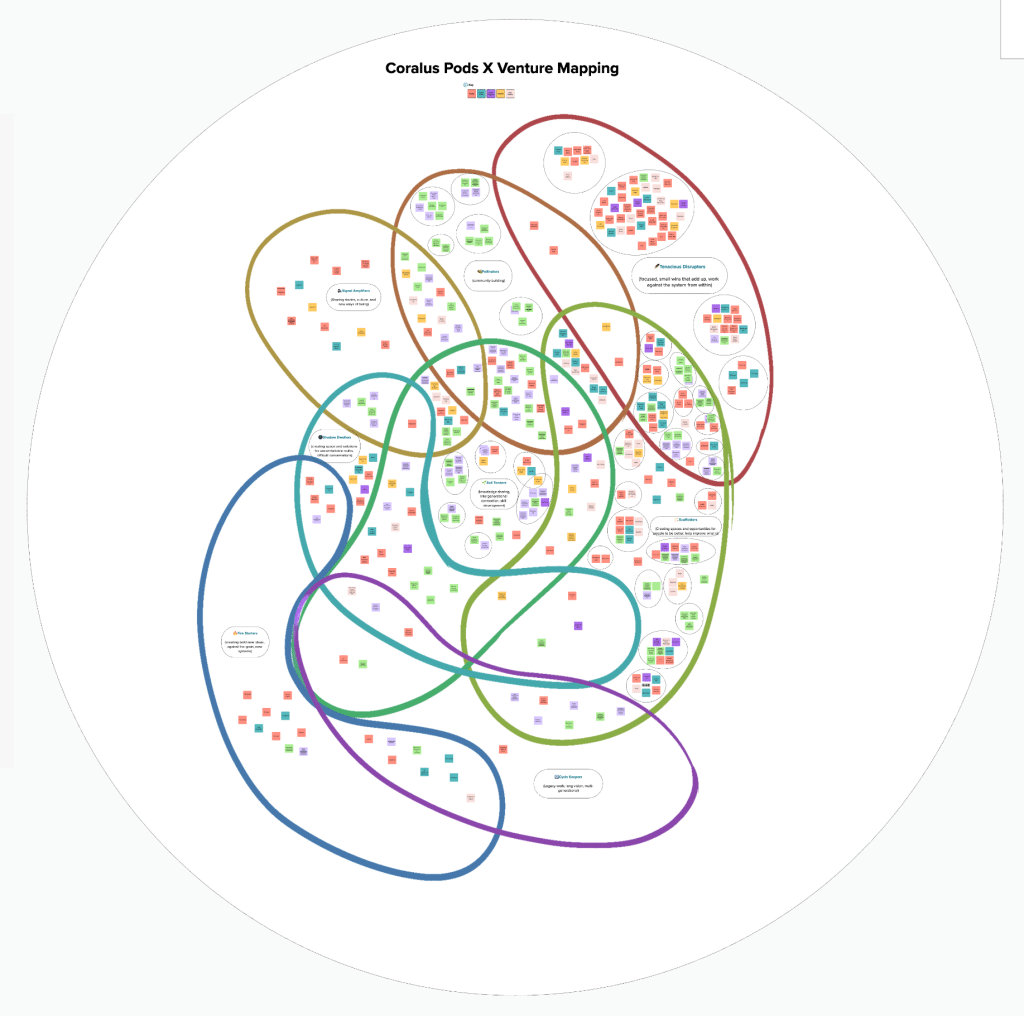
A while back, MJ Ryan and Finn Li from our Coralus Ventures team sat down to map it out. This was no small task. Many Ventures could easily live in multiple categories, and some proudly defy categorization altogether (Coralus included 😉). What emerged was fascinating: visible clusters that began to show us patterns – how we’ve collectively invested in areas like personal and planetary wellbeing, community safety, and regenerative design.
When we shared it with others, the first thing someone said was, “Your two biggest categories – personal wellness and planetary wellness – say a lot about who we are.” That insight landed deeply.
From there, another question surfaced: What would a map of all the pods look like?
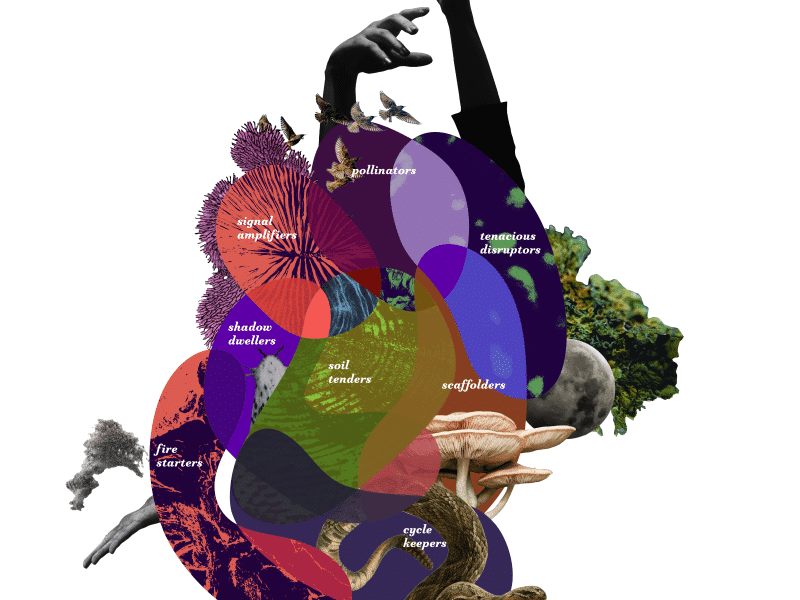
So Sarah Cuddie took on the project of mapping it. The result was more organic – overlapping circles and fluid shapes that revealed a completely different kind of intelligence.
Then came the next natural question: What if we mapped the Ventures and the Pods together?
That’s when it really got interesting. The patterns began to resemble a living organism – a visual expression of how Coralus actually operates as an interconnected ecosystem.
This mapping process has shown us something powerful: transformation doesn’t happen in silos. It emerges in relationship – between Ventures and Pods, between inner and outer work, between what’s being built and what’s being sensed.
What We’ve Learned: The Interstitium Metaphor
Over the past year, many of us have been studying the interstitium — the newly-recognized fluid network that surrounds every cell in the body. It’s what allows nutrients, information, and vitality to move. It’s an “in-between structure” that science previously ignored because it wasn’t a part with clear boundaries. Jen Brandel, wrote about it here.
When we understood this, something clicked:
Healthy ecosystems don’t thrive because the parts are strong.
They thrive because the interstitium — the connective tissue — is strong.
And suddenly, our decade of Coralus experience made sense in a new way.
From the beginning of SheEO, we saw the power of community to bring capital and care to bold ideas. Over time, we noticed that Ventures who were connected, participating, and in relationship with the community experienced a deeper sense of abundance, visibility, and support. They thrived not because they were exceptional “parts,” but because they were woven into the whole.
This is the heart of the interstitium metaphor:
It is the connections — not the separations — that generate health.
Why We Are Shifting: Moving from Parts to Interstitium
We are resetting Coralus to align with what healthy systems require: strong connective tissue instead of separated roles, where there are no more “two classes”—Ventures and Activators—living in parallel universes. Participation becomes the nutrient flow, because people thrive when they’re connected, witnessed, and resourced in relationship, not as recipients of a program. Presence becomes infrastructure, which is why we’re inviting everyone—Ventures and non-Ventures—into shared experiences, retreats, and curated gatherings. These are not “extras”; they are the primary mechanism for building the interstitium. When we are woven together like this, we become a field that can sense, respond, and evolve—creating conditions no program could ever deliver on its own.

INVITATION TO PRACTICE
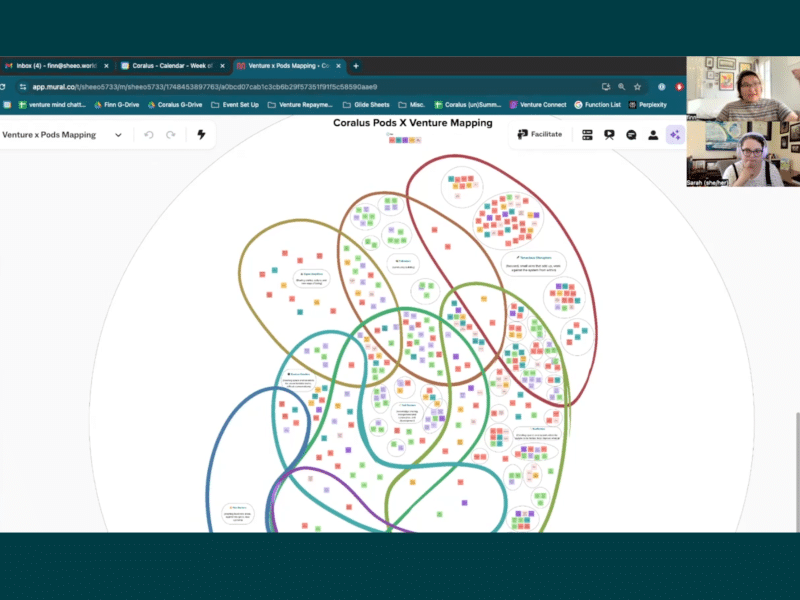
As you explore these maps, we invite you to slow down and look closely.
What do you see?
What’s alive in this network that perhaps can’t be named yet?
And if you were to draw your own map – what would you reveal?
Author

Related Articles


The Portal in the Orchard
This is a moment when practices that collapse time, call in ancestors, and align human presence with land become essential.